

Decks, pergolas and fencing in Austin
A 16x30 basic wood deck with handrails in the Austin metro starts at $6,500, labor and materials included.
What we build here
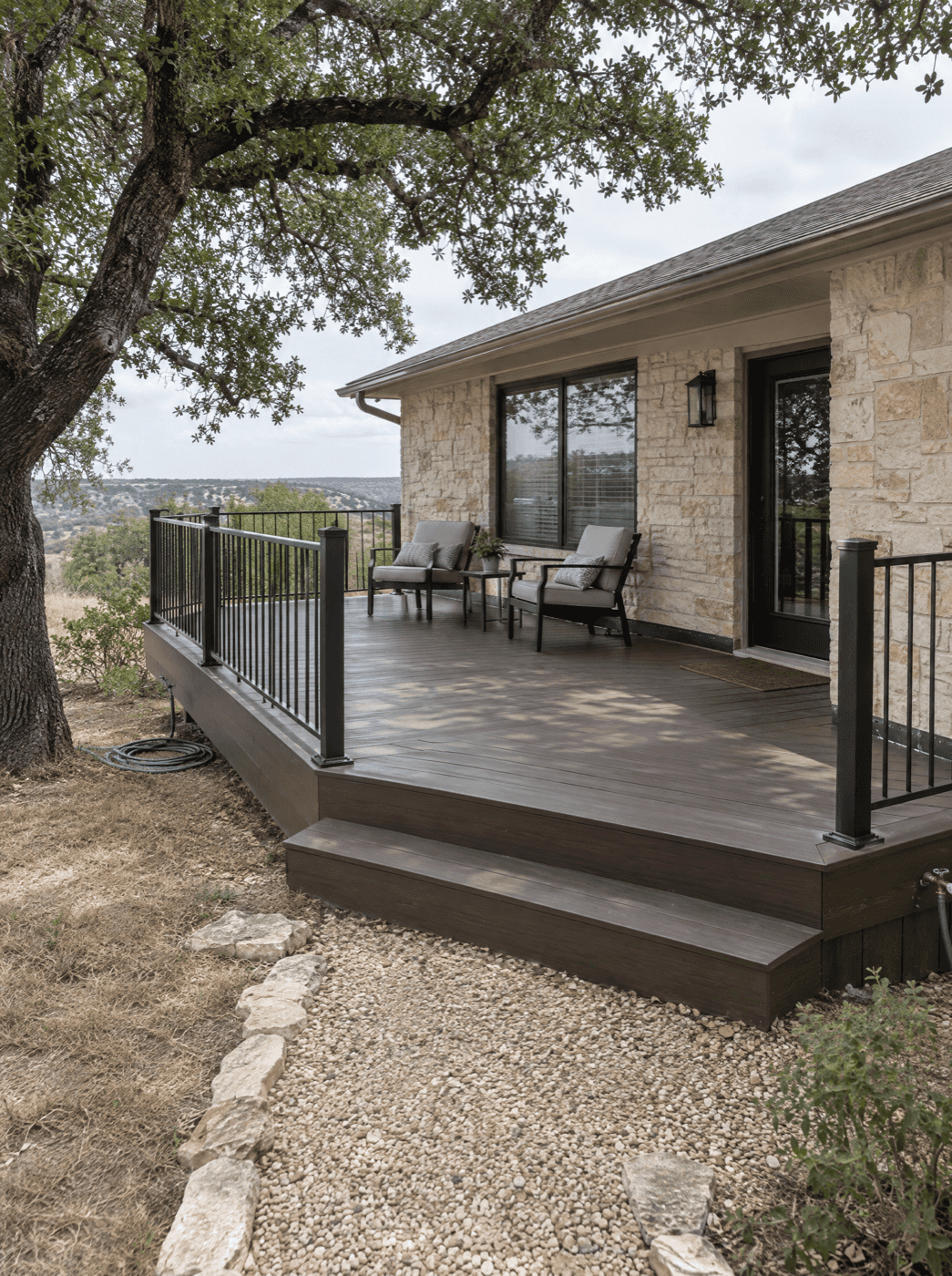
Custom Decks
Composite, cedar, multi-level and pool decks.
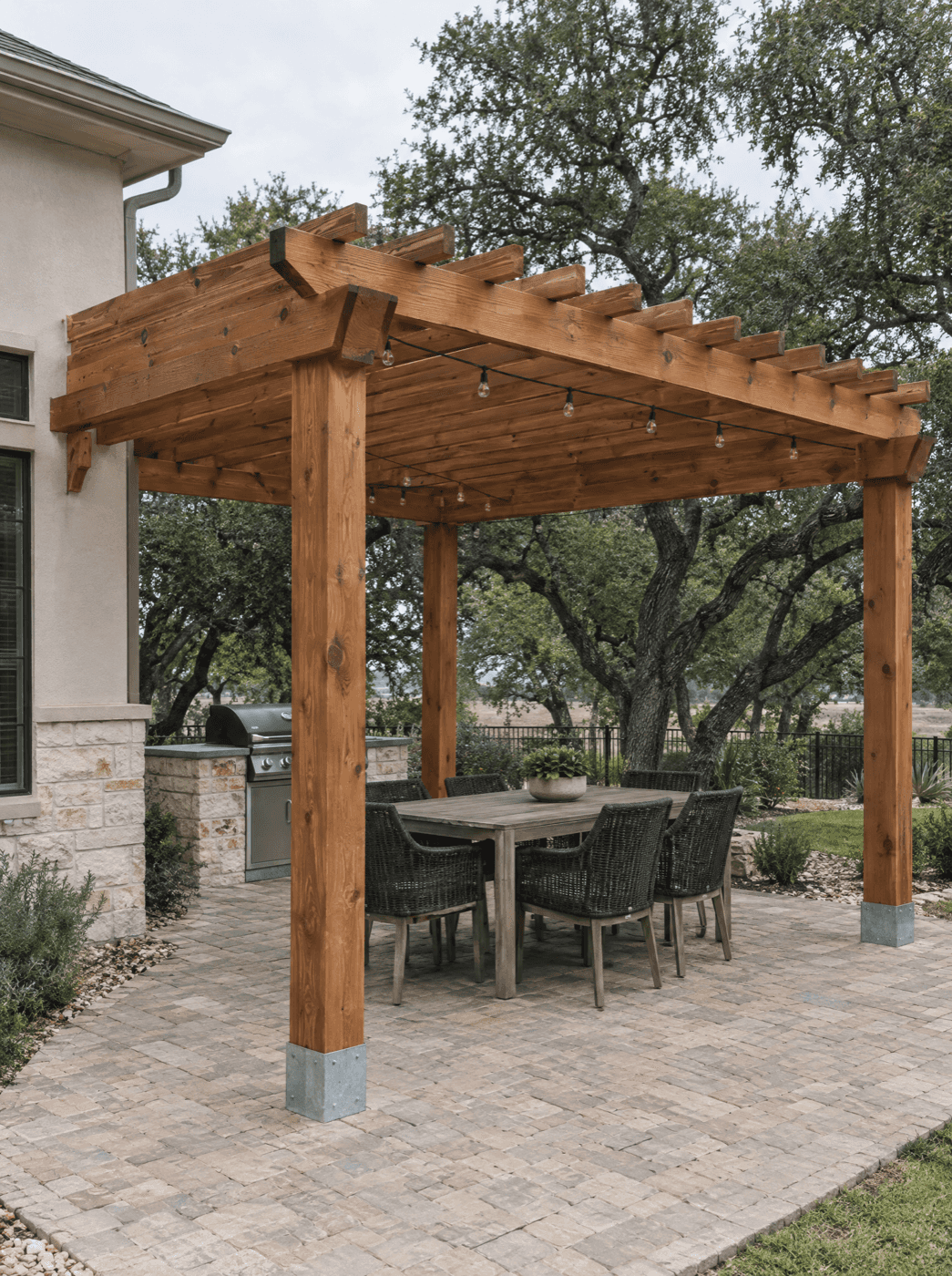
Pergolas
Cedar, aluminum, louvered and bioclimatic.
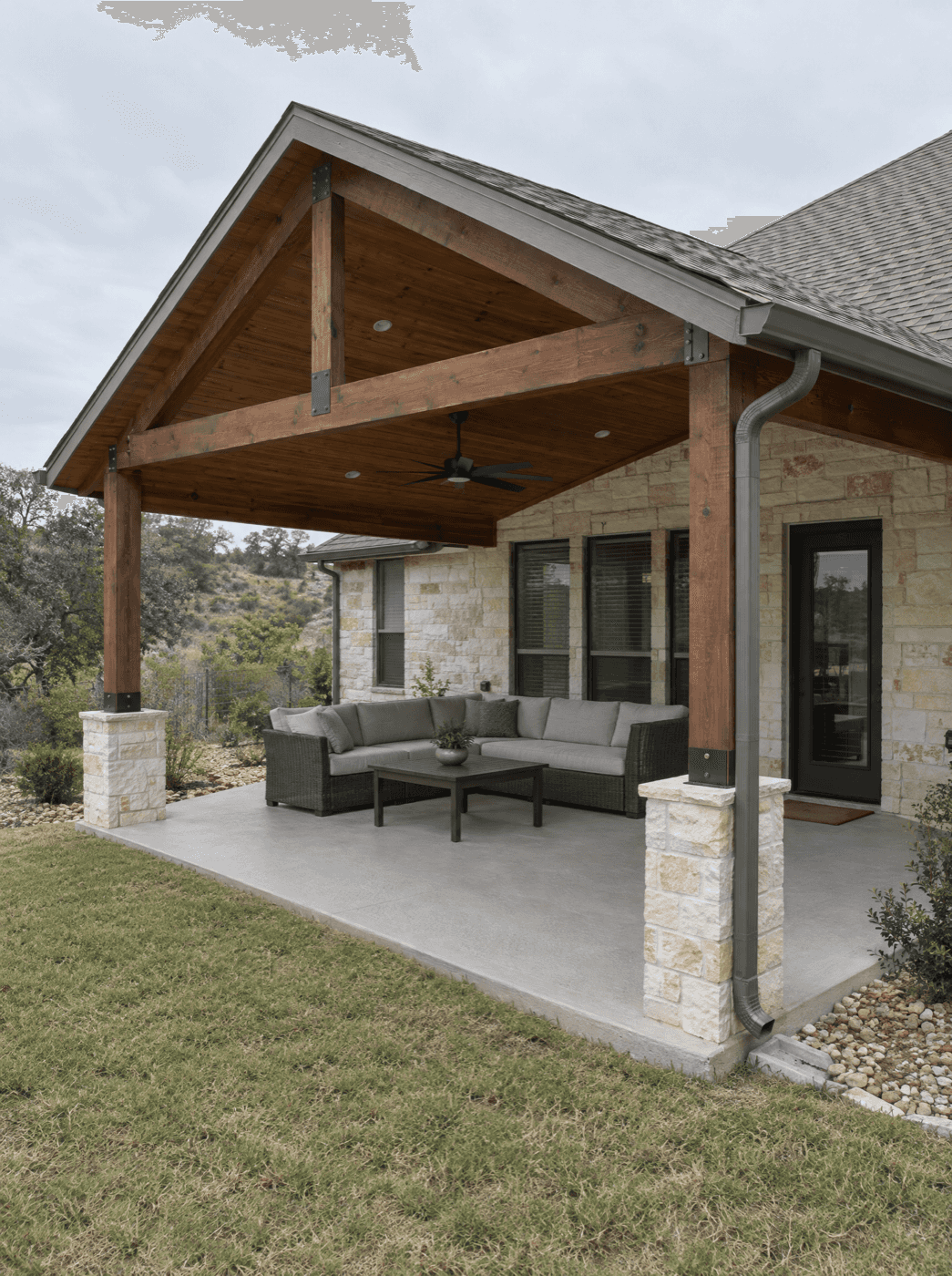
Covered Patios
Match-the-house roofs for year-round shade.
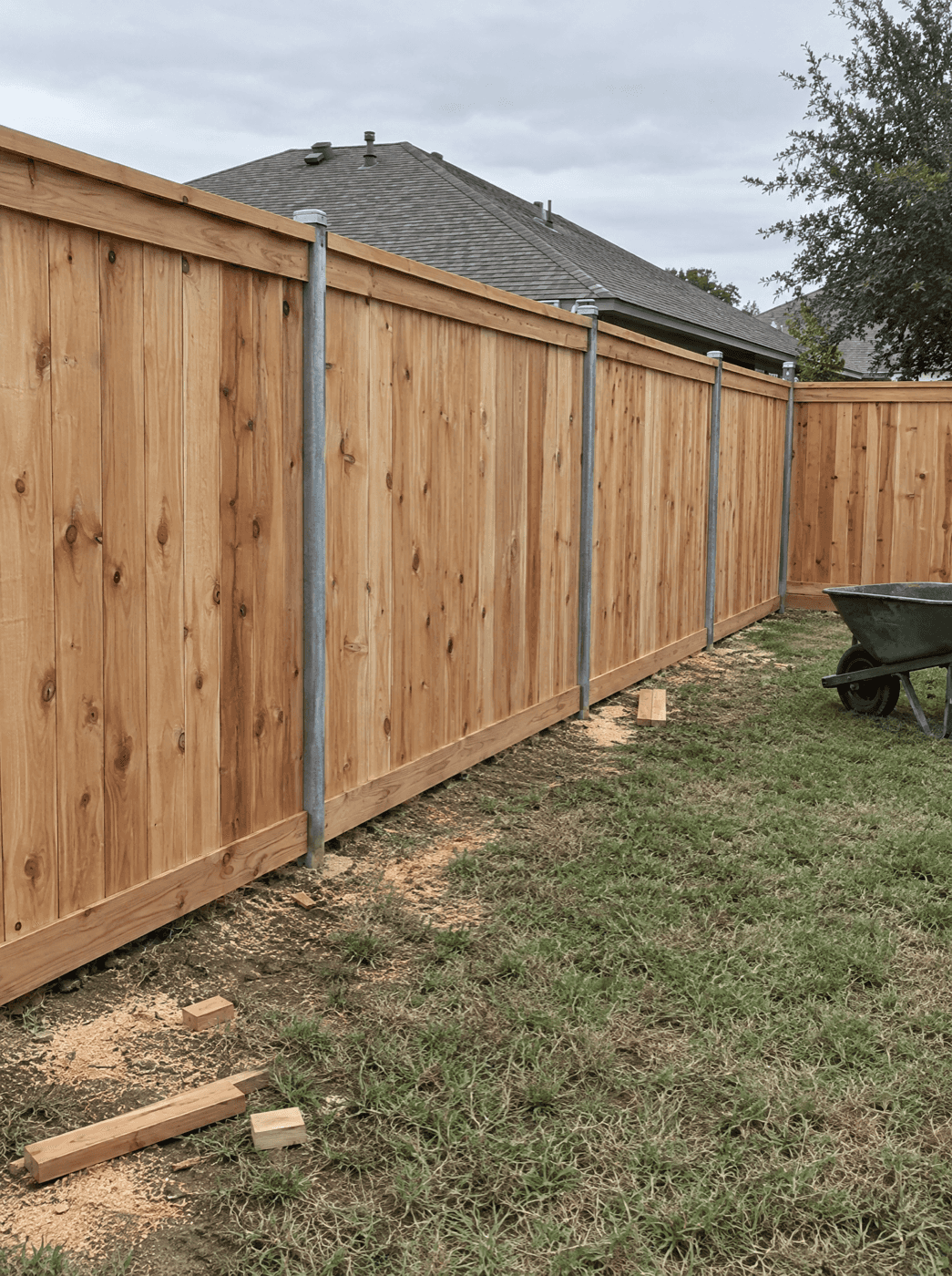
Fencing
Cedar privacy, horizontal board, and wrought iron.
Starting price
16x30 basic wood deck with handrails
from$6,500
- 16 ft by 30 ft (480 sq ft)
- Basic wood, handrails
- Labor and materials
A 16x30 basic wood deck with handrails in the Austin metro starts at $6,500, labor and materials included. Everything else is quoted fixed-price in writing within 3 to 5 business days.
Price my project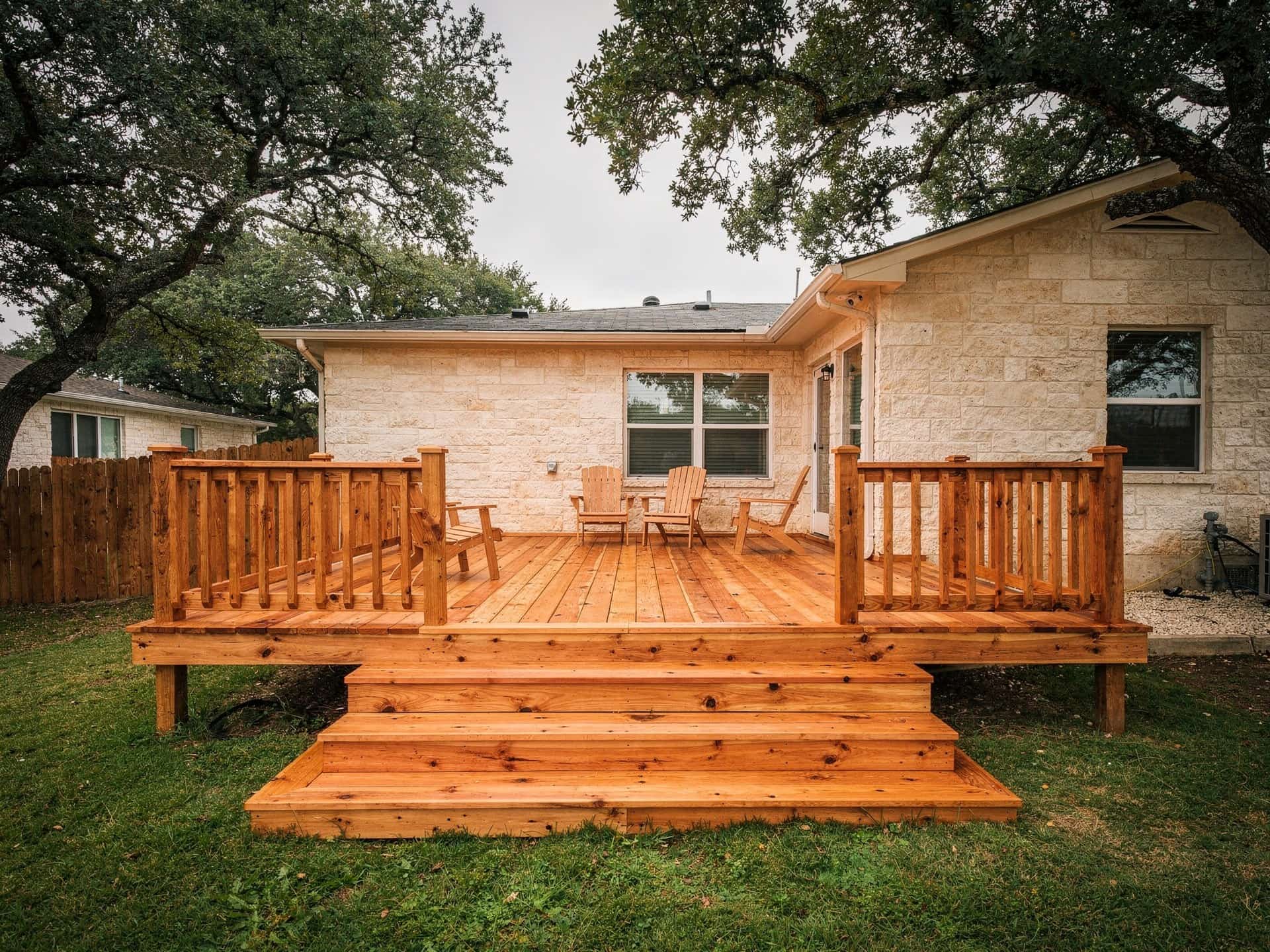
Where Austin-area jobs cluster
Circle C Ranch
Southwest Austin, 78739
Large HOA in the Barton Springs recharge zone; impervious cover limits and ACC review apply to patios and covered structures.
Steiner Ranch
Northwest Austin, 78732
Lake Austin hillside lots on limestone, steep grade, live oak canopy, and an active architectural review.
Avery Ranch
Northwest Austin and Cedar Park, 78717
Master-planned community with HOA design guidelines on fence height, material and stain.
Belterra
Unincorporated Hays County near Dripping Springs, 78737
A corridor community, not an Austin neighborhood: usually no residential building permit, but HOA review, floodplain and septic rules still apply, on limestone with live oak canopy.
Lakeway and Lake Travis
78734, 78738
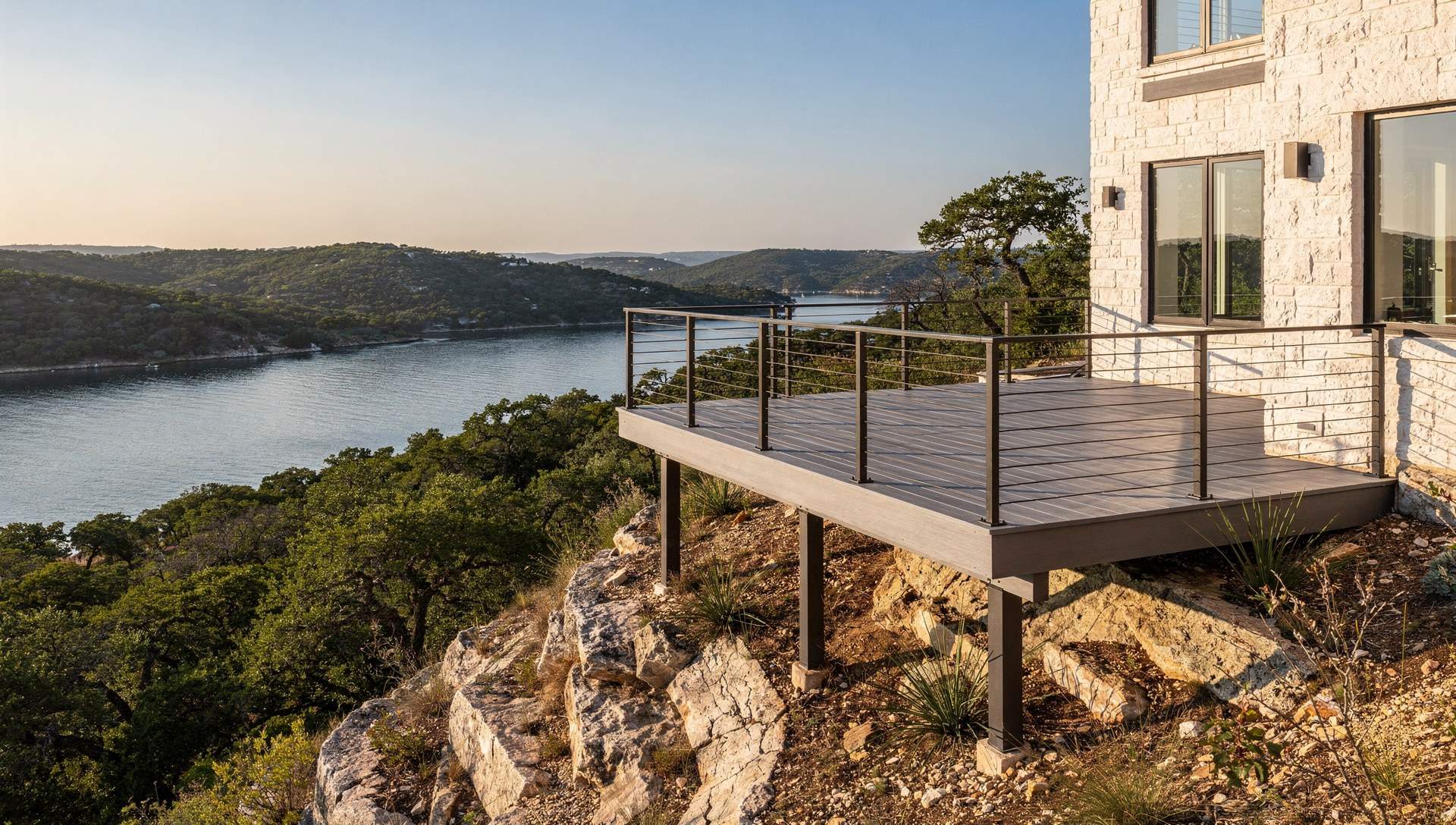
Hillside and lakefront lots with drilled piers and view railing; the City of Lakeway runs its own permit desk.
Round Rock and Georgetown
78664, 78665, 78626, 78628
Williamson County subdivisions on Blackland clay east of I-35 and limestone west, with HOA review in most master-planned communities.
Permits, soils and HOAs are different here
Permits
Inside Austin city limits the City of Austin Development Services Department typically requires a residential building permit for a deck that is attached to the house or sits more than 30 inches above grade, and any covered structure, from a shingle-roof patio cover to a louvered pergola, needs one.
MoreLess
Electrical for lighting is a separate permit. Outside city limits, unincorporated Travis, Hays and Williamson counties do not issue residential building permits, but floodplain development permits, septic setbacks and HOA rules still apply. Lakeway, Bee Cave, Cedar Park, Round Rock and Georgetown each run their own permit desks. We confirm which jurisdiction the address falls in before the quote, because it is not always obvious on the edge of the city.
Soils
Austin sits on the Balcones Fault.
MoreLess
West of MoPac and along Lake Travis the ground is Hill Country limestone with thin soil and real slope, so deck and pergola piers are drilled into rock and fence posts are core-drilled. East of I-35 the ground is Blackland Prairie clay that swells and shrinks through the year, which calls for deeper belled footings and wider concrete collars on fence posts. Southwest Austin, including Circle C, sits in the Barton Springs recharge zone, where the city limits impervious cover; that can shape how large a patio or covered structure the lot can take.
HOA and ACC review
The Austin metro is dense with master-planned communities, and most of them run an architectural review before a deck, pergola, patio cover or fence goes in.
MoreLess
Circle C Ranch, Steiner Ranch, Avery Ranch and Belterra each have design guidelines on material, height, color and, for fences, whether a greenbelt-backed lot must use iron rather than solid cedar. We prepare the submission package as part of the quote and handle the back-and-forth. Review typically adds 2 to 4 weeks to the calendar.
Lake Travis and Lakeway hillside lots
Lots above Lake Travis are steep, rocky and wind-exposed.
MoreLess
Decks are multi-level with drilled piers and engineered stair runs, railing is designed for open sightlines, and fences are stepped or racked down the grade. The City of Lakeway and the Village of The Hills have their own permit and design rules, and lakefront lots below the Lower Colorado River Authority shoreline carry their own restrictions.
Same process in Austin as in San Antonio
Step 1: Consult
We meet at your home, walk the backyard, and listen to how you actually want to use the space. A real conversation about the project, with no pressure and no hard sell.
Step 2: Design and scope
We sketch the layout in place, talk through structure and elevation, and define a clear written scope so everyone knows exactly what is being built.
Step 3: Materials
We bring real material samples to your home and compare them in your own light. Composite versus cedar, roof options, railings, and finishes, chosen with you, not guessed.
Step 4: Permits and HOA
When your project needs HOA approval or a city permit, we prepare the submission package and handle the back-and-forth so you are not chasing paperwork.
Step 5: Build
A tight, trusted crew builds the project on a written schedule. You get regular progress updates, so you always know what is happening and what comes next.
Step 6: Walk-through
We walk the finished project with you, complete a punch list together, and hand over every manufacturer warranty registered in your name.
What Austin-area homeowners ask first
How much does a deck cost in Austin?
A 16x30 basic wood deck with handrails in the Austin metro starts at $6,500, labor and materials included. That is a 16 ft by 30 ft (480 sq ft) deck in economy-grade wood with no upgrades (no composite boards, lighting, multi-level framing or built-ins), with handrails, built and installed. The final number depends on the decking material, the height above the ground, stairs, railing style, permits and HOA review. Every job gets a written fixed-price quote, line by line, within 3 to 5 business days after a free in-home consult. A 16x30 basic wood deck with handrails in the Austin metro starts at $6,500, labor and materials included. Built in 3 to 6 weeks after permits clear. The written quote arrives within 3 to 5 business days. Serving San Antonio, the Texas Hill Country and the I-35 corridor to Austin.
Does Klema Builders really serve Austin from San Antonio?
Yes. Klema Builders is based in San Antonio, about 80 miles south of downtown Austin on I-35. Austin-area consults and builds are typically grouped by area across Travis, Williamson and Hays counties. Tell us the address and we will confirm the schedule. Klema Builders serves Austin, Round Rock, Georgetown, Lakeway, Dripping Springs, Buda and Kyle from its San Antonio office, about 80 miles north on I-35, with Austin-area visits typically grouped by area and Austin permits and HOA review handled for you. Klema Builders is based in downtown San Antonio and builds across San Antonio, the Texas Hill Country and the I-35 corridor to Austin. Downtown Austin is about 80 miles north of our office on I-35, and the northern suburbs in Round Rock and Georgetown are a little farther. That distance is not a reason to say no; it is a reason to schedule differently. Austin-area consults and builds are typically grouped by area across Travis, Williamson and Hays counties, and the quote is written the same way as in San Antonio: fixed-price, line by line, after a free in-home consult. The trade-off is honest: an Austin project may wait for the next grouped visit rather than starting the week you sign. We confirm the schedule with you before you sign.
Do I need a permit for a deck or covered patio in Austin?
Inside city limits the City of Austin Development Services Department typically requires a residential building permit for a deck that is attached to the house or more than 30 inches above grade, and a covered patio or pergola with a roof always needs one. Outside city limits in unincorporated Travis, Hays or Williamson County there is usually no residential building permit, but floodplain, septic and HOA rules still apply. Confirm the threshold for your address with DSD; Klema Builders files the permit as a line item in the quote.
How much does a fence cost in the Austin area?
The price of a fence in the Austin area depends on the length of the run, height, material (cedar privacy, horizontal board or wrought iron), gates, rock or clay under the post holes, and HOA review. Klema Builders does not publish a price list: after a free in-home consult you get a written fixed-price quote, line by line, within 3 to 5 business days, and that quote is the total you pay. Whether a fence needs a City of Austin permit is decided by Austin Development Services based on height, location, floodplain and right-of-way, so check the address before design; HOAs such as Circle C, Steiner Ranch and Avery Ranch run their own review.
How much does a pergola or covered patio cost in Austin?
The price of a pergola or covered patio in Austin depends on size, material, roof type, how it ties into the house roof, fans and lighting, and the permit and HOA review. Klema Builders does not publish a price list: after a free in-home consult you get a written fixed-price quote, line by line, within 3 to 5 business days, and that quote is the total you pay. Both need a City of Austin permit inside city limits and an HOA submission in most master-planned communities.
Is an Austin-area project quoted the same way as in San Antonio?
Every Austin-area project starts with a free in-home consult. We measure, check the soil, the grade and the HOA rules for the address, then send a written fixed-price quote, line by line, within 3 to 5 business days. The price you sign is the total you pay.
More questions (3)Fewer questions
What is different about building west of MoPac versus east of I-35?
Soil. West of MoPac and along Lake Travis the ground is Hill Country limestone with thin soil and steep grade, so deck and pergola piers are drilled into rock and fence posts are core-drilled. East of I-35 the ground is Blackland Prairie clay that swells and shrinks with the seasons, so footings go deeper with belled bottoms and fence posts get wider concrete collars. The same design gets a different footing spec depending on which side of the Balcones Fault the house sits on.
Which services are available in the Austin metro?
All outdoor living services: custom decks, pergolas and arbors, covered patios, patios and pavers, screened porches, fencing, and deck and fence staining. Metalwork such as gates, railings and iron fencing is offered case by case depending on scope and scheduling, and larger metal buildings or structural steel are reviewed individually.
How long does an Austin-area project take?
Composite or cedar decks take 3 to 6 weeks from signed contract to walk-through once permits clear, cedar pergolas 1 to 2 weeks on site. Austin-area visits are typically grouped by area, and HOA review in the master-planned communities typically adds 2 to 4 weeks to the calendar.
Building in the Austin metro? Tell us the address.
Free in-home consult, fixed-price quote line by line within 3 to 5 business days. Serving San Antonio, the Texas Hill Country and the I-35 corridor to Austin.